- Published
- Updated
Maintainable PHP development and modernization
PHP still runs a large part of the web that businesses depend on. For many businesses in Thailand, the important website or backend is not a brand-new app. It is a WordPress site, Laravel project, custom PHP booking flow, CRM connector, payment integration, or admin tool that already supports daily work.
Good PHP development improves that system without breaking the behavior the business relies on. Sometimes the task is a focused fix or feature. Sometimes it is a PHP-version upgrade or a longer modernization programme. A complete rewrite is only one option, and often not the safest first one.
That longevity did not happen by accident. PHP’s history, from personal tools to a modern language helps explain why so many useful systems were built with it and why its ecosystem remains practical.
When PHP development help is useful
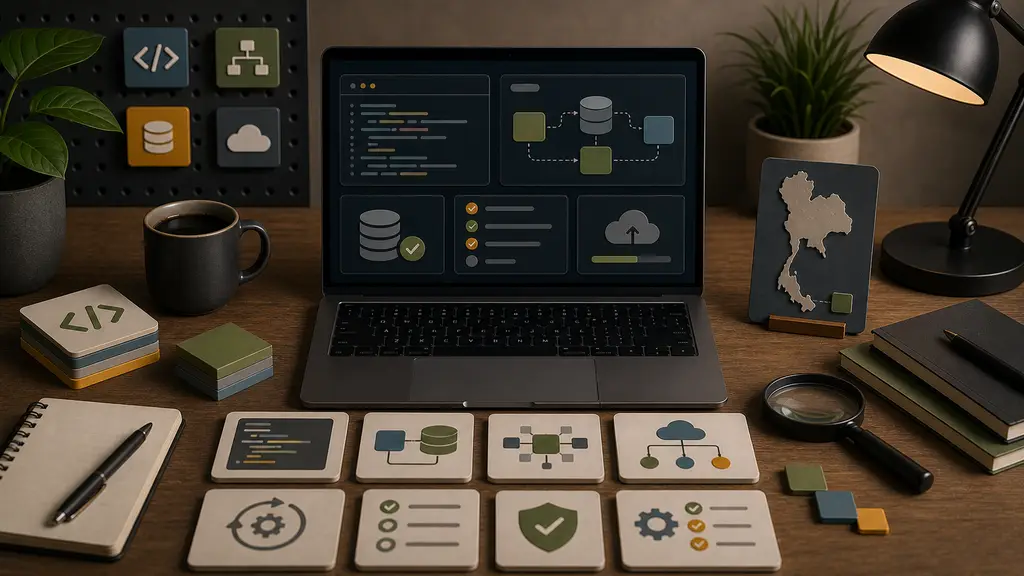
PHP help is useful when a website or system is important enough to maintain properly but does not need a heavy agency process.
Typical work includes:
- Fixing faults in existing PHP code
- Improving WordPress themes, plugins, and admin workflows
- Maintaining Laravel applications
- Upgrading unsupported or ageing PHP versions safely
- Connecting booking, CRM, payment, or email systems
- Improving performance in PHP, MySQL, caching, or frontend output
- Stabilizing fragile code before it becomes expensive to change
- Adding useful features without rebuilding the whole system
The common thread is maintainability. A quick patch is not useful if it hides the real fault or makes the next change harder.
Start by understanding the actual risk
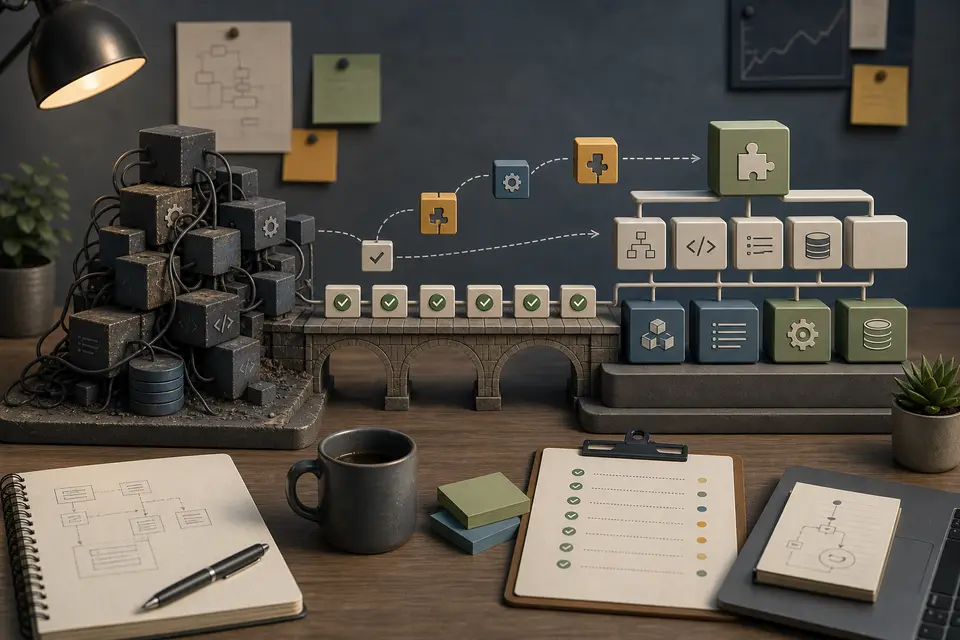
“Legacy” is not a useful diagnosis by itself. An older PHP application may contain years of working business rules, integrations, operational knowledge, and edge cases that are not documented anywhere else. Replacing it completely can turn known technical debt into a long project with uncertain scope and a risky final migration.
Before changing code, identify what makes the application difficult or dangerous to maintain:
- An unsupported PHP runtime or abandoned dependencies
- No reliable local or staging environment
- Manual deployment with no tested rollback process
- Important behavior without automated tests
- Database changes made directly in production
- Business logic mixed into templates and request handlers
- Integrations without logs, retries, or clear ownership
- Security assumptions that no longer match current use
- Knowledge held by one person or visible only in the code
Rank those risks by operational impact. A runtime exposed to the internet without security support is more urgent than inconsistent naming. A fragile payment or booking integration deserves attention before a broad code-style cleanup.
Map the system before changing it
Create an inventory of the application:
- Entry points, routes, scheduled jobs, and command-line tasks
- Databases, tables, files, and external storage
- Authentication, permissions, and administrative tools
- APIs, webhooks, email, payment, and third-party integrations
- Hosting, deployment, queues, and background workers
- Critical customer and staff workflows
- Dependencies and their version constraints
Do not assume code is safe to remove because it looks unused. Established systems often contain monthly jobs, rare administration actions, or partner integrations that are invisible during ordinary browsing. Logs, server configuration, database activity, and conversations with the people using the system help confirm what actually runs.
Make behavior visible before refactoring
Modernization is safer when changes can be understood in production. Before broad refactoring, improve error and exception logging, visibility into scheduled jobs and queues, monitoring of important endpoints, alerts for repeated failures, backup verification, and deployment history.
Logs must not expose credentials, personal data, or other sensitive information. Their purpose is to show what failed, where it failed, and which business action was affected. Better observability also reveals existing faults that might otherwise be blamed on new work.
An older application may not have been designed for automated testing, but testing does not have to wait for a rewrite. Start with characterization tests that protect behavior already in use, especially:
- Login and permission checks
- Pricing and calculations
- Orders, bookings, and enquiry creation
- Imports, exports, and scheduled jobs
- API and webhook behavior
- Critical reports
Tests at an HTTP, command, service, or database boundary can provide useful protection even when the internal code is tightly coupled. The objective is not an impressive coverage percentage. It is confidence that the important workflows remain intact.
Treat a PHP-version upgrade as a controlled project
A version selector in a hosting panel makes the final switch look simple. The preparation is what makes it safe. WordPress plugins, custom themes, Laravel code, Composer packages, cron jobs, server extensions, and payment or booking integrations can all depend on PHP behavior.
Before changing the runtime, record the production PHP version and extensions, then identify everything that runs on PHP. Check the current lifecycle on the official PHP supported versions page rather than relying on an old project note.
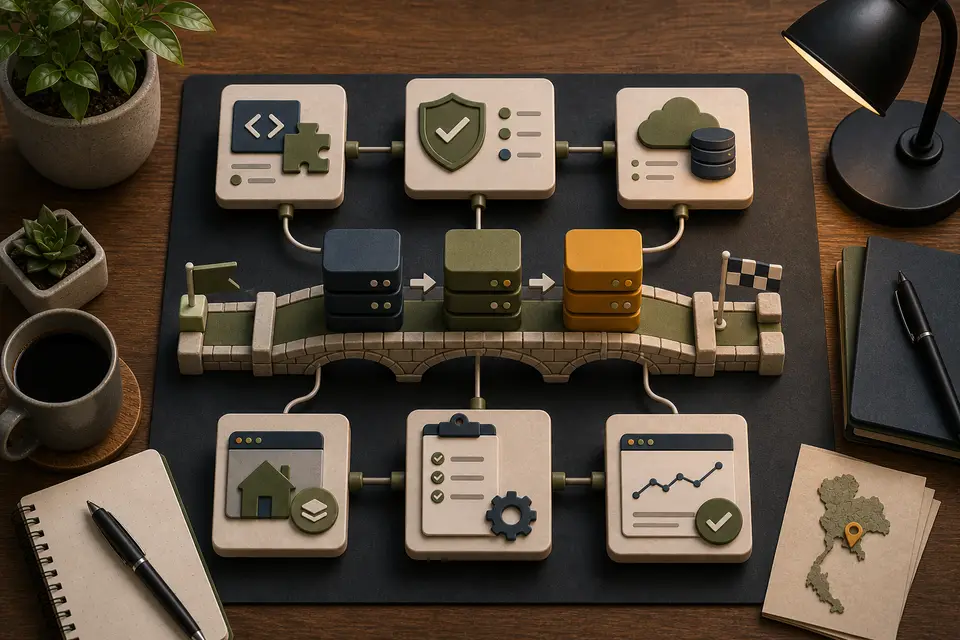
A controlled upgrade normally follows this sequence:
- Review application, plugin, theme, and dependency compatibility.
- Prepare current backups and verify how restoration works.
- Reproduce the system in staging or a representative clone.
- Enable strict error reporting in that controlled environment.
- Fix deprecations, incompatible behavior, and unsupported libraries.
- Test representative workflows on the target PHP version.
- Deploy with monitoring and a rollback or forward-fix plan ready.
- Test the critical workflows again after the production switch.
For a Thailand booking, travel, ecommerce, or service website, the flows that create revenue or enquiries come first: forms, checkout, booking, login, admin editing, search, API callbacks, and custom reports.
Avoid combining the runtime upgrade with unrelated architecture changes. Keeping the upgrade focused makes compatibility problems easier to identify and reduces how much behavior changes at once.
Bring dependencies under control
Some older PHP applications contain copied libraries, manually edited vendor code, or dependencies that have not been reviewed for years.
Create an explicit dependency inventory. Move manageable packages into Composer, remove packages only when their lack of use has been confirmed, and identify abandoned libraries that need replacement or isolation. Update in controlled groups, read upgrade notes, review transitive dependencies, and test the behavior that uses each package.
Do not edit installed vendor files to make an update pass. Such a patch can disappear during the next installation and leaves the real compatibility problem unresolved. If a dependency cannot be replaced immediately, isolate it behind a clear boundary so less of the application depends on it directly.
Create boundaries around difficult code
Legacy code becomes easier to modernize when new and changed behavior is kept out of its most tangled areas. Useful boundaries include:
- A service around an external API
- A repository around complex database access
- A dedicated class for pricing or validation
- An adapter around an old library
- A queue job around slow external work
- A new endpoint or module beside an older implementation
The goal is not to force every modern design pattern into the application. It is to give important behavior one understandable place and reduce the number of files that must change together.
Change the database and deployment process carefully
Database changes can create high deployment risk because old and new application versions may briefly run against the same schema. Prefer backward-compatible steps:
- Add a new column or table without removing the old structure.
- Deploy code that can work during the transition.
- Migrate or backfill data in controlled batches.
- Confirm that the new path is stable.
- Remove old code and schema only when nothing uses them.
Large data migrations should be observable, resumable, and tested with realistic data volumes. A migration that succeeds on a small development database may lock tables or exceed deployment time limits in production. A backup matters, but it is only useful when restoration has been tested and the recovery time is understood.
The release process should be repeatable as well: version-controlled changes, consistent dependency installation, automated checks, environment-specific configuration, tracked database migrations, deployment logs, health checks, and a tested recovery plan. Smaller releases reduce risk and make a fault easier to connect to a specific change.
Refactor around active work
Broad cleanup projects often consume time without improving the parts of the system that matter. Refactor where there is a concrete reason: a fault exposes unclear responsibility, a feature would duplicate difficult code, a dependency needs isolation, a slow operation needs a clearer boundary, or a security problem requires a safer implementation.
Some areas are better replaced than repaired. A bounded rewrite can make sense when the module has a clear interface, its existing behavior can be tested, the replacement solves a concrete problem, data migration and rollback are manageable, and old and new implementations can be compared before the old one is removed.
An import process, reporting module, search function, administration screen, or isolated integration may fit that description. Replacing one understood module is very different from rebuilding the entire application.
WordPress, Laravel, and custom PHP
PHP work looks different depending on the system.
WordPress work often involves plugins, themes, performance, database cleanup, forms, search, checkout, or editor workflows. The article about custom WordPress development and troubleshooting covers that work more directly.
Laravel work commonly involves routes, queues, scheduled tasks, APIs, authentication, data models, and deployment workflows. For those projects, see Laravel developer help in Thailand.
Custom PHP may be older code without a formal framework. That does not automatically make it a replacement candidate. Stabilizing risky areas, protecting important flows with tests, upgrading PHP, and improving the code gradually is often the more controlled path.
Performance work can involve PHP execution time, database queries, object caching, page caching, external APIs, images, JavaScript, and hosting. The useful question is not “is PHP slow?” but “where is this request spending time?”
APIs and business workflows
Many PHP systems become business-critical because they connect booking engines, calendars, payment providers, CRMs, email services, property data, or reporting dashboards.
Reliable API work requires retries, logging, idempotency, validation, and clear failure handling. A request that works once in development is not enough. The guide to reliable API integrations explains those patterns in more detail.
The Thailand-villas.com case is a relevant example: a production PHP platform connecting property data, availability, booking flows, local destination pages, and administration. The project is older, but it demonstrates why backend behavior should be preserved and modernized carefully when it supports real operations.
Frequently Asked Questions
Does an older PHP application need a full rewrite?
No. Age alone is not a diagnosis. Existing applications often contain valuable business rules and unusual cases, while a full rewrite introduces new scope, migration, and behavior risks. Stabilizing and modernizing the highest-risk areas is often safer.
Is it safe to remove code that looks unused?
Not without checking. Rare administration tasks, scheduled jobs, and partner integrations may not appear during ordinary browsing. Logs, configuration, database activity, and the people using the system should confirm whether the code is genuinely unused.
Is a PHP upgrade just a hosting setting to change?
No. The switch may affect plugins, custom code, Composer dependencies, cron jobs, extensions, and integrations. Compatibility review, staging, testing, and a controlled rollout are what make the change safe.
Is a current backup enough protection?
Not by itself. Restoration must be tested, the recovery time understood, and critical behavior verified in staging and after deployment. Database changes should also remain backward-compatible during the transition.
Is PHP itself always the cause of a slow request?
No. Time may be spent in database queries, caching, external APIs, frontend assets, or hosting. Performance work should measure the request path before choosing a fix.
A phased modernization roadmap
A practical plan usually starts with safety and ends with structural improvement:
- Inventory the system and rank operational risks.
- Improve backups, logging, monitoring, and deployment visibility.
- Protect critical workflows with tests.
- Move to a supported PHP version.
- Bring dependencies under controlled management.
- Isolate fragile integrations and business rules.
- Refactor or replace bounded areas as real work reaches them.
- Measure whether reliability, maintenance, and delivery improve.
The goal is not to make an older application look newly built. It is to make it safer to operate, easier to understand, and easier to change while preserving the valuable behavior already inside it. If an existing PHP system needs that kind of work, send me a short description of the system, the affected workflow, and the current risk.