WhyBangkok.com
Building a structured Astro guide to living in Bangkok
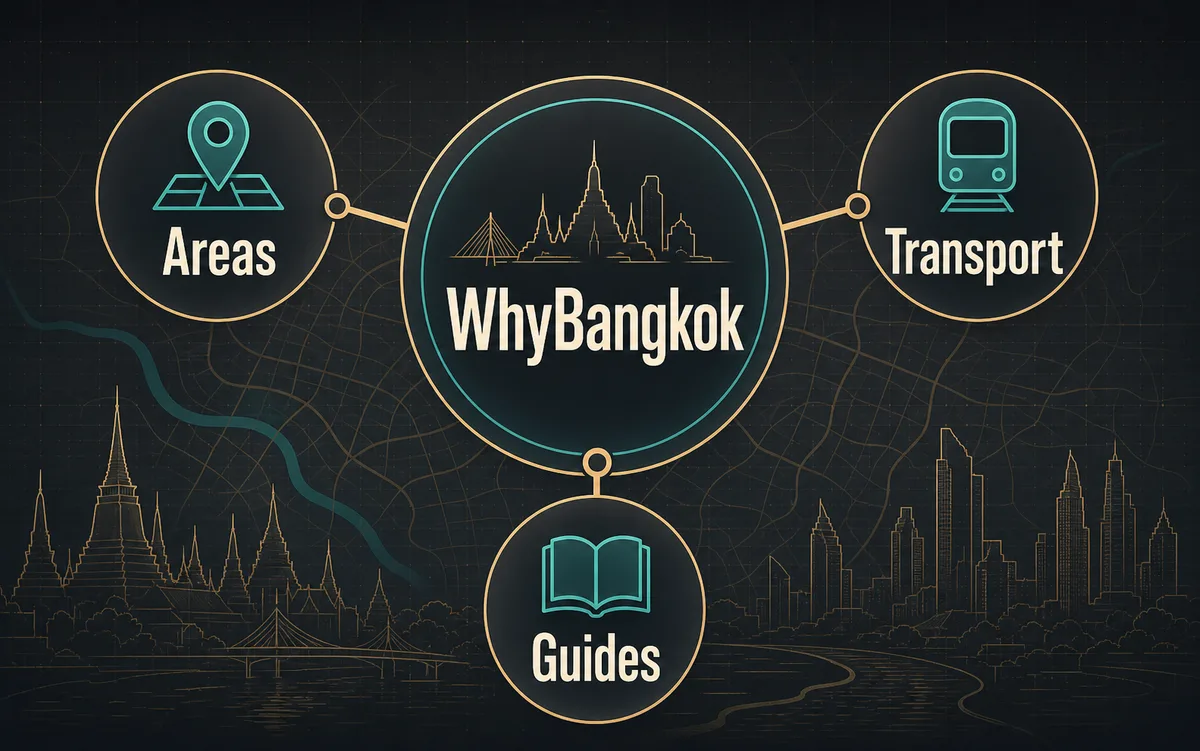
WhyBangkok.com is a live Astro guide for people moving to and living in Bangkok. In September 2026 it had more than 600 pages, including nearly 200 restaurants, about 50 districts, more than 30 areas, hospitals, schools, and the BTS and MRT lines, all connected through one content model. It is built out continuously, because a guide to daily life has to be updated all the time.
- Status
- Live and continuously developed
- Period
- Current project
- Region
- Bangkok, Thailand
- Industry
- Guide to moving to and living in Bangkok
The challenge
Living in Bangkok comes down to practical questions: where to live, how long the commute is, which hospital or school is nearby. Those answers depend on how districts, areas, and transport lines relate to each other. A guide made of separate articles cannot answer them well, and it becomes harder to maintain as it grows.
My role
I handle the full technical and strategic implementation: Astro development, content modelling, route structure, technical SEO, internal linking, search, deployment, and the editorial tools behind the content.
What I built
- Built the site in Astro with structured content collections for districts, areas, transport, restaurants, hospitals, schools, shopping, attractions, accommodation, and guides.
- Modelled the relationships between districts, areas, and the BTS and MRT lines, so pages connect the way people actually move around the city.
- Added Pagefind search for visitors, with logging of what people search for.
- Built an integration with Google Search Console and Bing Webmaster Tools that flags pages with high impressions but no clicks, and pages sitting on the second page of results.
- Built an internal semantic search with Supabase and OpenAI embeddings, used while writing to find related pages and build internal links.
- Deployed the site on Cloudflare with static delivery.
Outcome
The guide grew past 600 pages without turning into a pile of unrelated articles. New content is added inside a clear structure, related pages are linked deliberately, and search data points to which pages to improve next instead of relying on guesswork.
What the project taught me
- The districts, areas, and transport relationships are the part I am happiest with. Navigating Bangkok is crucial for living there, so the structure of the site follows how people move around the city.
- The Search Console and Bing integration turns search data into an editing list: a page with many impressions and no clicks needs a better title or description, and a page on the second page of results needs better content or links.
- The semantic search is an editorial tool, not a visitor feature. It helps me find the pages a new piece of content should link to, which matters more as the site grows.
- Content is checked in person. When a restaurant is added, my daughter and I go and visit it and check the details ourselves.
Why it remains relevant
The case is relevant for any content-heavy website that needs a clear content model, deliberate internal links, search data that feeds back into editing, or a maintainable Astro site that can keep growing.
Related work and guides
Need a structured content platform?
I plan and build content-heavy websites where routes, metadata, internal links, performance, and editorial workflows need to work together. That can mean a new Astro site, a technical SEO cleanup, or a more maintainable structure for an existing content platform.